
If you want to know how to build a sales playbook that actually scales, the answer isn't more hustle - it's a system. The difference between a team that hits quota consistently and one that doesn't usually isn't talent; it's whether they have repeatable processes, the right psychology, and the data to know what's actually working.
This guide draws from a panel of practitioners: Kim Dang (sales psychology and behavioral frameworks), Brandon Taylor (CompanyCam, scaled a high-performing outbound team), and Val Yaromenko (Big Sister AI, AI-powered sales coaching). You'll get frameworks for building automation-first workflows, applying behavioral science to buyer conversations, and using data-driven coaching to develop reps faster.
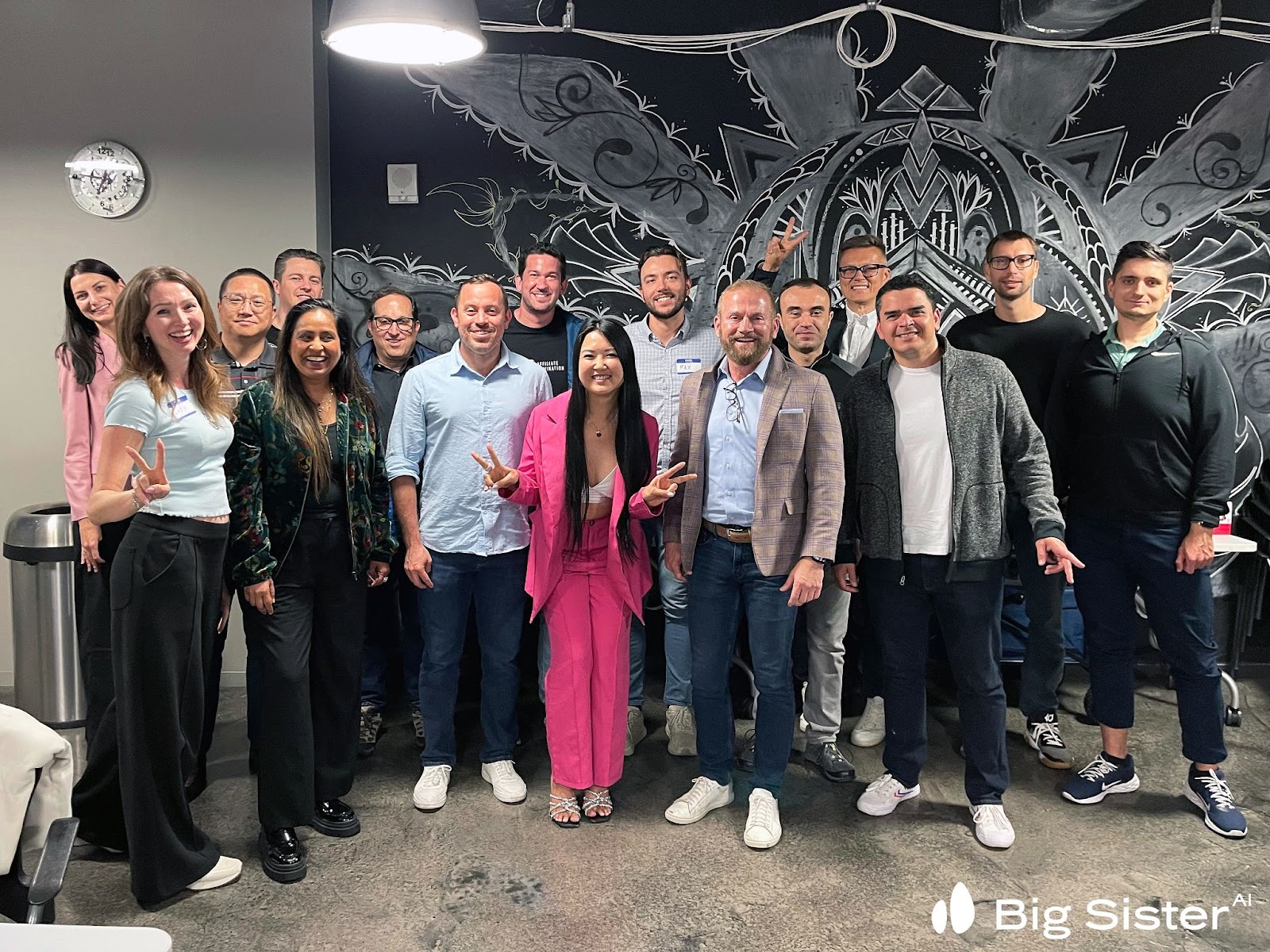
Sales are the backbone of every successful business, and understanding how to build repeatable, scalable sales systems is key to sustained growth. The “Sales OStin. Sales Playbook” event, organized by Lucy Yaromenko (CPO and Co-founder of Big Sister AI) and Valentyn Yaromenko, brought together sales leaders and founders to explore what it takes to thrive in today’s dynamic market. Featuring insights from Kim Dang, Brandon Taylor, and Valentyn Yaromenko, the event focused on practical frameworks around automation, psychology, systems thinking, and data-driven sales. It's part of an ongoing series - see also Beyond Cold Calls and From Revenue Drain to Sales Gain for more Sales OStin frameworks.
What Is a Sales Playbook - and Why Most Teams Don't Have One
A sales playbook is the documented version of how your best reps actually sell: your ideal customer profile, the stages of your deal cycle, the scripts and talk tracks for each stage, objection-handling responses, and the metrics that tell you whether a rep is on track. Most teams never write it down - the "playbook" lives in one senior rep's head, which is exactly why performance drops when that rep is out or a new hire is still ramping up.
A working playbook usually covers:
- Ideal customer profile and buying signals - who you sell to and how to spot a real opportunity.
- Stage-by-stage process - what has to happen before a deal can move forward.
- Scripts and talk tracks - the language that works, including how to open, qualify, and handle objections.
- Automation and tooling - what the CRM and outreach stack should do without a human touching it.
- Coaching metrics - the skills and behaviors you measure, not just the deals that close.
Some teams manage this in a shared doc that goes stale within a quarter. Others build it directly into an AI coaching layer, like Big Sister AI's sales coaching platform, so reps get feedback against the playbook inside the CRM instead of a PDF nobody opens. The four frameworks below - covering automation, psychology, systems, and data - are what the panel actually used to build theirs.
Step 1: Automate the Repeatable Parts of Your Sales Process
🔑Key Takeaways:
- Automate to Scale: Kim emphasized that automation is essential, not optional, for growth. Using Kim's system, she shared success stories like Lani Dickinson, who grew from $1M/year in corporate to $100K/month in personal sales.
- Use Embedded Commands: Incorporating psychology, Kim demonstrated how simple sales scripts with embedded commands can increase conversion rates.
- Sales Funnel Simplification: She mapped a clear buyer journey - from ad to CRM pipeline - showing how tech stacks like Go High Level support consistent sales performance.
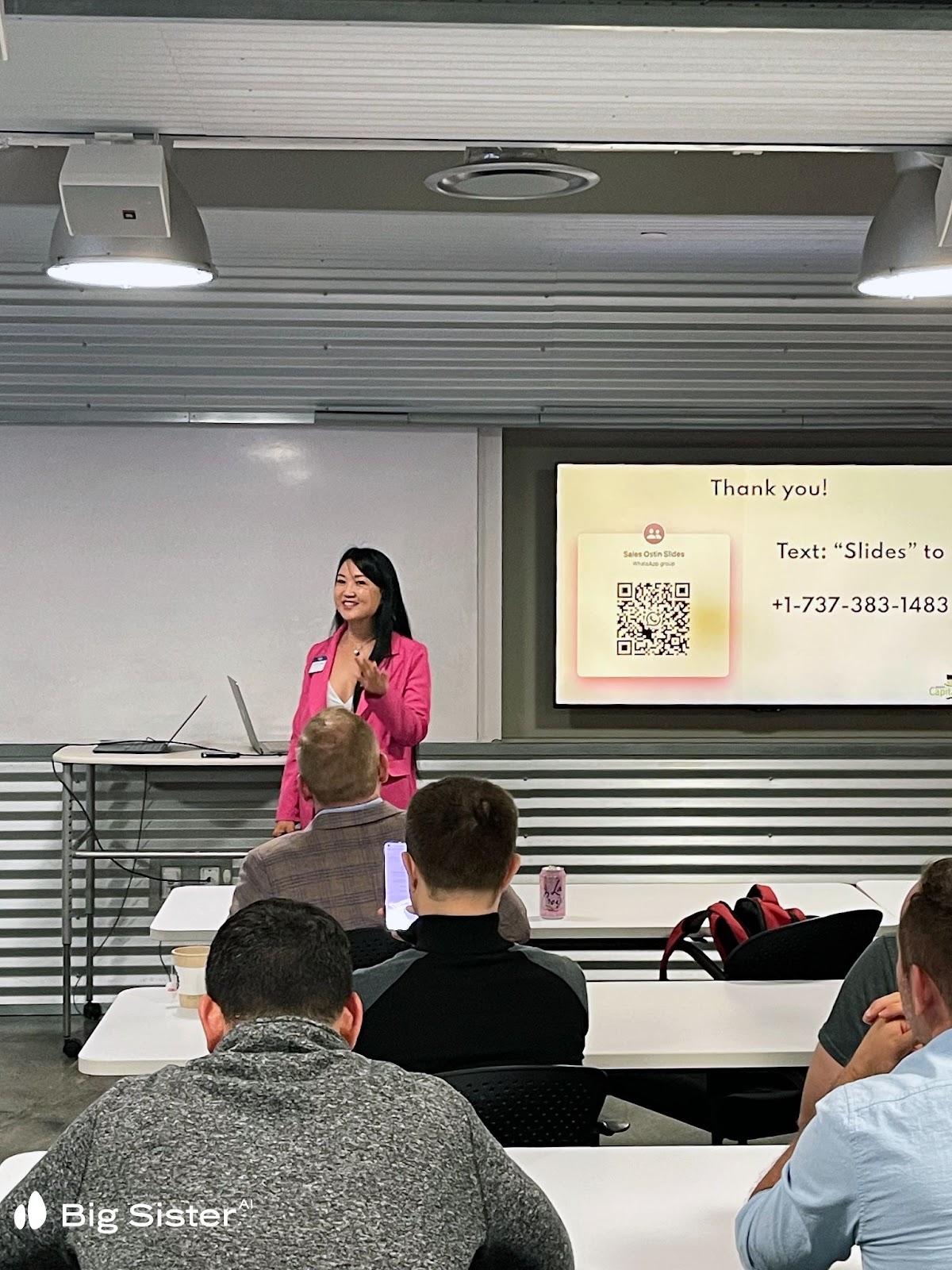
Kim Dang, Co-Founder of The eCom Capitalist, emphasized that successful sales start with systematization.
“To make more sales, automating the sales process is essential.”
She said, highlighting how automation allows entrepreneurs to focus on strategy rather than repetitive tasks. She showed how her “AP Sales Playbook” helped entrepreneurs like Lani Dickinson, a hospital executive who transitioned to making over $100K a month through a scalable sales system.
Step 2: Build Buyer Psychology Into Your Scripts
Kim also introduced the use of embedded commands as a subtle psychological tool during discovery calls. For example, asking questions like:
“So, would you say e-commerce is something you want as extra income?”
Kim Dang, on using embedded commands during discovery calls
Asking it this way helps prospects become aware of their own needs, guiding them toward action - a scripted line any rep can reuse once it's written into the playbook.
Finally, she walked the audience through a simplified funnel: a coffee-themed ad, a landing page with a form, and a CRM pipeline (white-labeled from Go High Level). With structured processes and teamwork, Kim demonstrated that high-ticket sales can be built on surprisingly straightforward systems. For a deeper look at designing that flow, see our guide on building a sustainable sales pipeline.
Step 3: Turn the Playbook Into a Living System, Not a Manual
🔑Key Takeaways:
- Playbooks as Growth Engines: He encouraged companies to see playbooks not as manuals, but as essential sales systems for repeatable success.
- Tap into Existing Knowledge: “Every GTM problem has already been solved,” Brandon stated, urging teams to leverage community wisdom.
- Sales is Everywhere: He reframed sales as a universal skill, not a job title - from investor pitches to internal approvals.
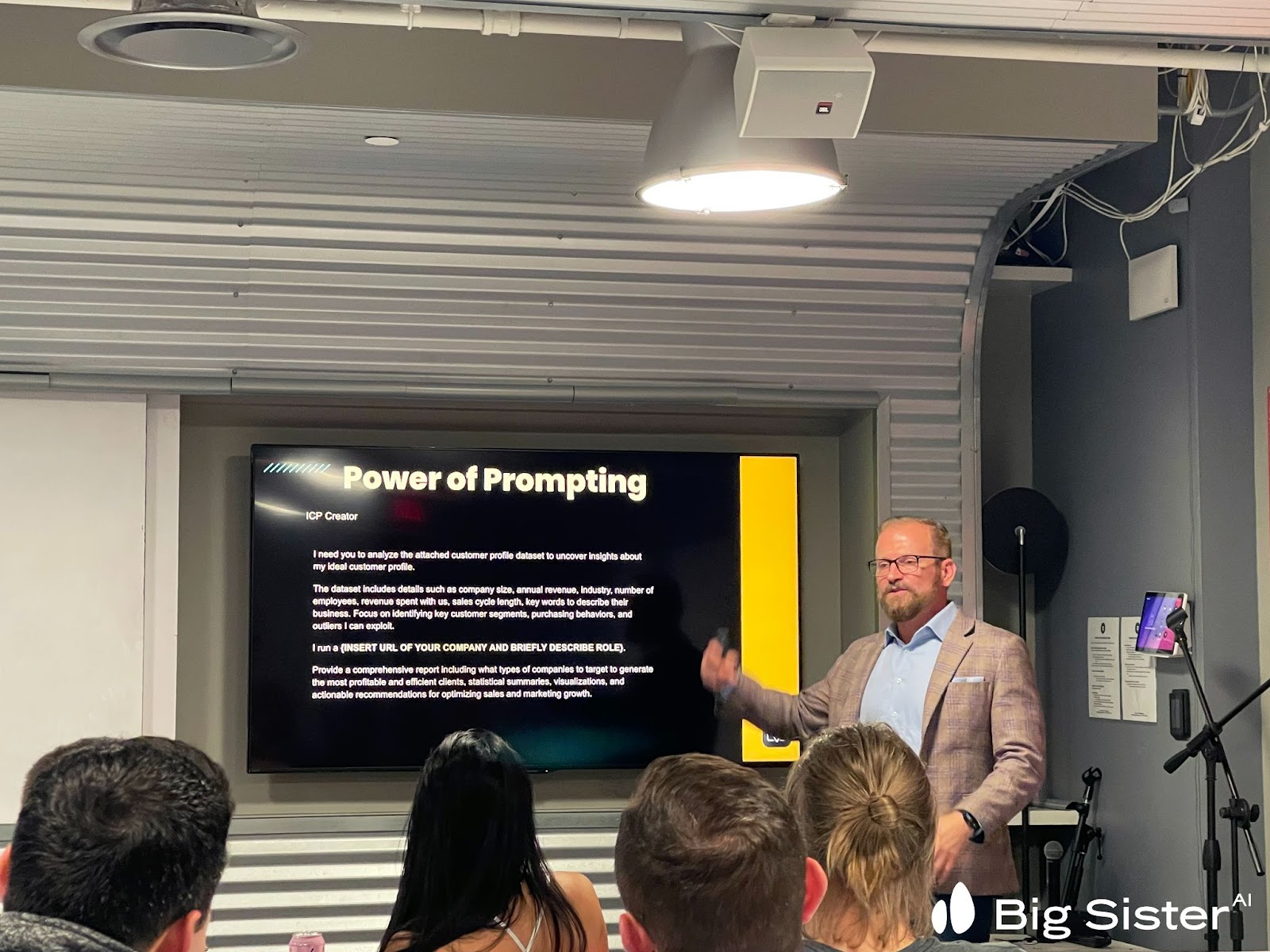
Brandon Taylor, VP of ENT, MM, Partnerships & Alliances at CompanyCam, began with a simple truth:
“Every go-to-market problem you're facing has already been solved by someone.”
He urged sales leaders not to waste time reinventing processes when proven solutions exist within their professional communities.
Brandon stressed that everyone in a company is in sales, not just SDRs and AEs. CEOs pitch investors, marketers sell ideas internally, and even engineers must “sell” their vision in product meetings. Reflecting on his early days selling books door-to-door, he shared:
“It was the hardest thing I’ve ever done - but also the most structured.”
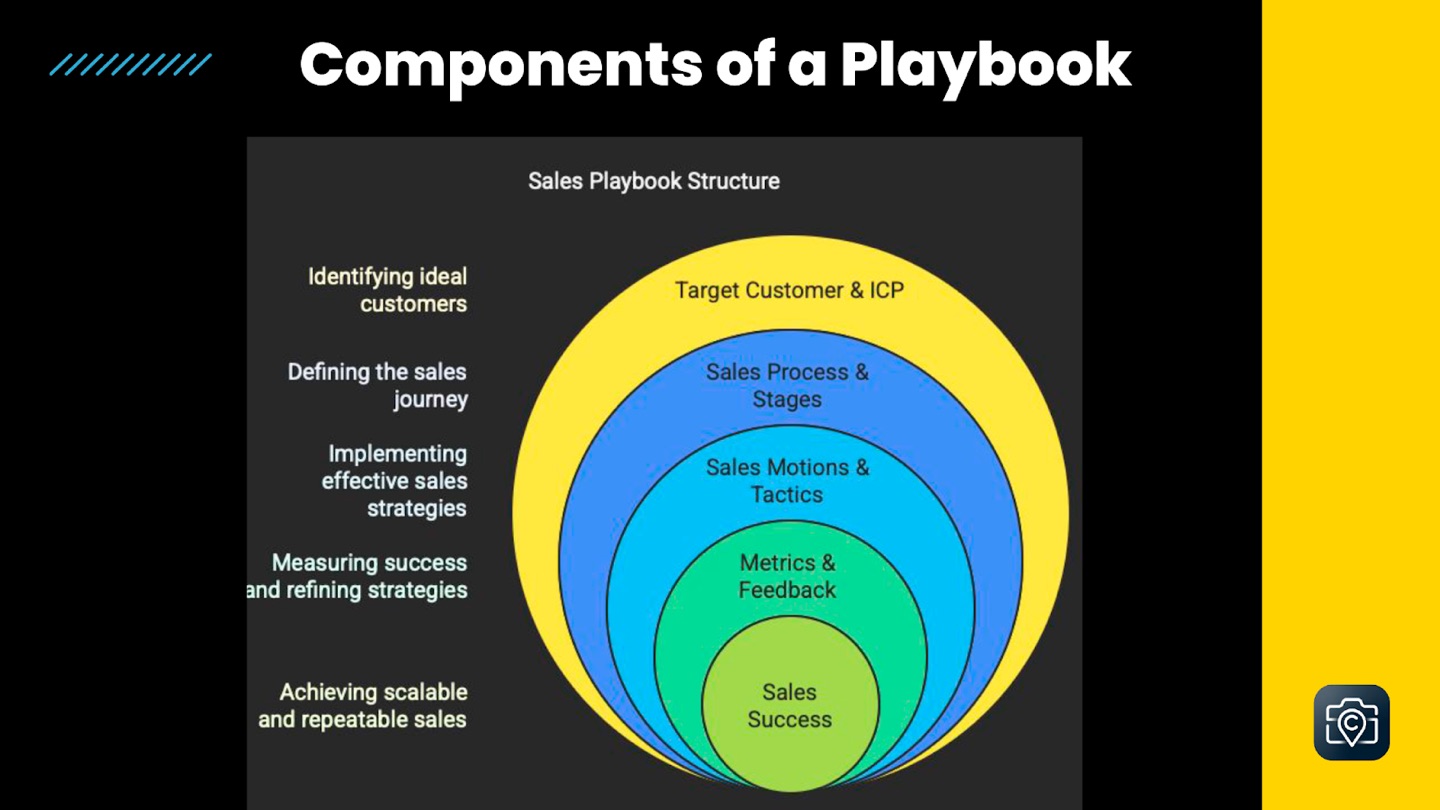
A well-structured sales playbook ensures consistent, scalable success by defining clear processes, strategies, and feedback loops.
He also shared lessons from his experience growing a Dell business unit from $7M to $75M in eight years, showing how clear strategy, playbooks, and execution lead to compounding growth. Now, as an outsourced CRO, he audits businesses and identifies top growth levers based on 12 key drivers.
Step 4: Coach With Data, Not Guesswork
🔑Key Takeaways:
- Better Leads Over More Leads: Val challenged the “more leads” mindset, instead focusing on increasing conversion through skill optimization.
- AI-Powered Coaching: Big Sister AI acts as a “Jarvis for sales,” analyzing CRM data to provide dashboards, skills scores, and real-time coaching.
- Performance Metrics Like Sports Teams: Drawing inspiration from the NBA and MLB, Val emphasized measuring sales skills, not just outcomes.
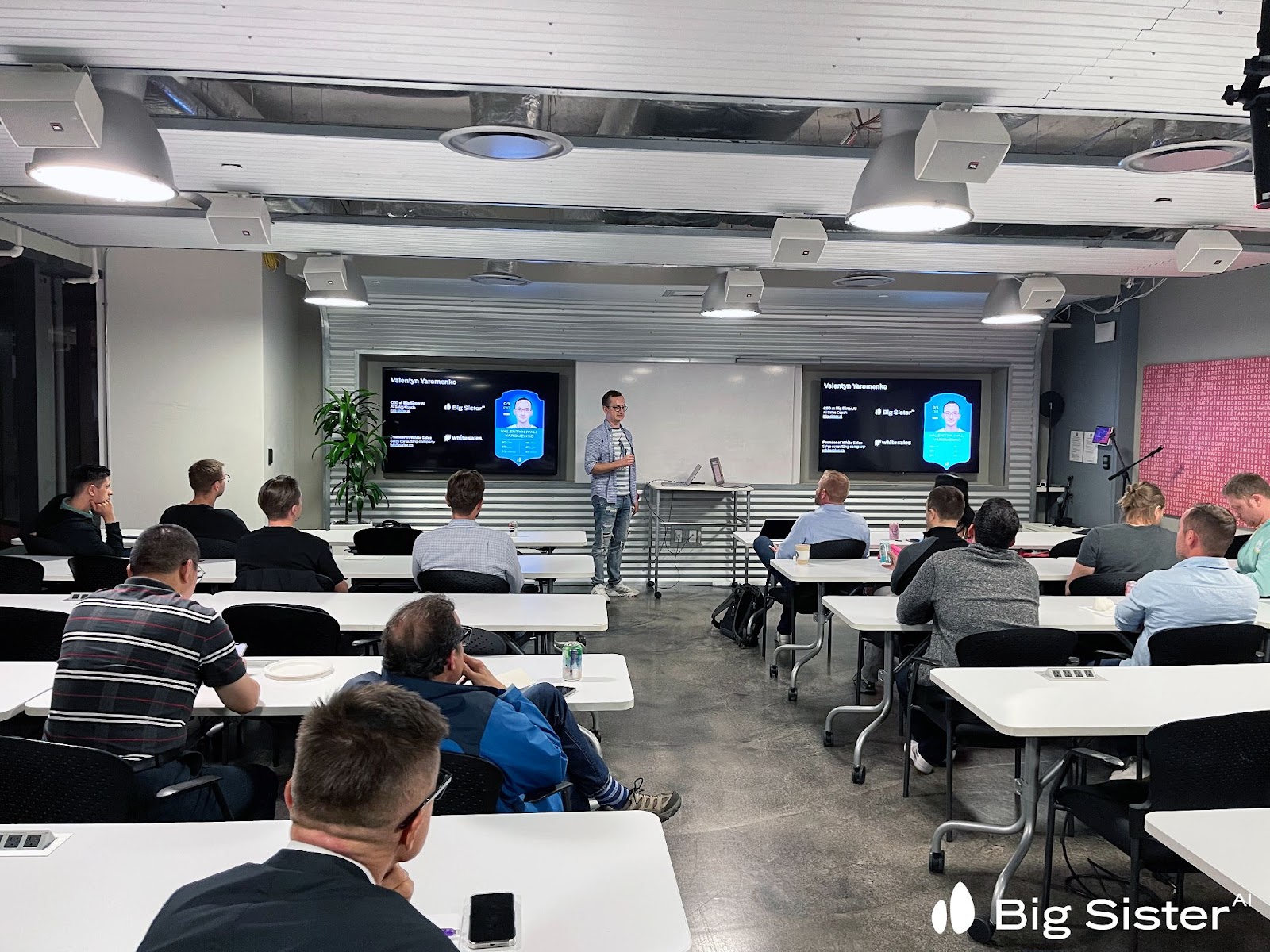
Valentyn Yaromenko, Founder & CEO of Big Sister AI, opened with a humorous take:
“I consider myself a true Austinite - I’ve lived here for over a year and take allergy pills every day.”
Shifting gears, he addressed a key challenge for founders: how to increase revenue without simply chasing more leads.
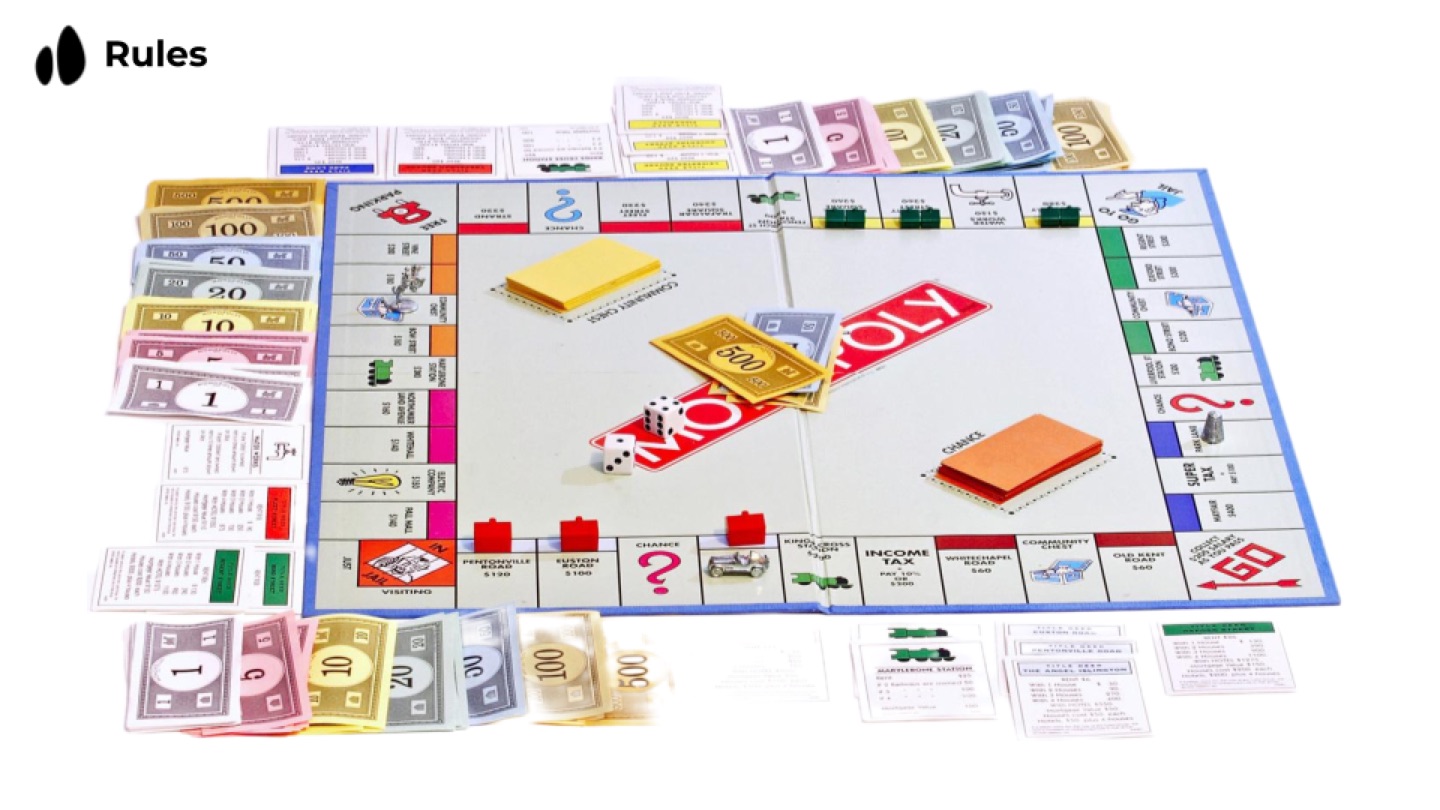
“Every game has its plays, rules, and players. But if you try to play without rules, the experience might not be as good as it could be,” he explained.
Val advocated for applying a “Moneyball” approach to sales - using skills-based data to assess reps’ strengths and weaknesses, just like pro athletes. Big Sister AI connects to CRMs, analyzes actions, and delivers three key outputs: a live dashboard, skill scores graded like FIFA ratings using the same framework laid out in our Sales Score Standard, and AI-driven feedback that helps reps grow.
His vision? Salespeople should become “superhuman,” like Jarvis from Iron Man.
“You don’t need to replace reps with AI - you need to upgrade them.”
How to Build a Sales Playbook: A 7-Step Checklist
- Automate to Scale: Simplify and accelerate sales with effective automation tools so reps spend time selling, not doing data entry.
- Use Psychological Techniques: Write embedded commands and guided conversations into your scripts to increase conversions.
- Adopt & Enforce Playbooks: Keep playbooks active, collaborative, and updated - a document nobody opens isn't a playbook.
- Apply Data-Driven Coaching: Track skills, not just results, for lasting improvements in rep performance.
- Collaborate Across Networks: Don’t reinvent the wheel - connect with experts and communities who've already solved your GTM problem.
- Build Sales Resilience: Embrace setbacks as part of the journey and write the recovery plan into the playbook too.
- Leverage AI Smartly: Use AI to augment, not replace, your sales team.
FAQ: Building a Sales Playbook
How long should a sales playbook be?
Short enough that a new hire actually reads it. Most working playbooks run 10-20 pages, or a handful of linked pages in a wiki - one section per deal stage, plus scripts and objection handling. Length matters less than whether a rep can find the answer to "what do I say next" in under a minute.
Who owns the sales playbook?
Usually sales enablement or the sales leader, but the best playbooks are written with input from top performers, not just management. Kim Dang's and Brandon Taylor's frameworks above both came from reps and founders who were in the field, not from a manual written top-down.
How often should you update it?
Review it every quarter at minimum, and update it any time a new objection, competitor, or product change comes up often enough to need a standard answer. A playbook that isn't revised as your market changes turns into exactly the "manual nobody opens" problem Brandon Taylor warned against.
Start Building Your Sales Playbook
Whether you’re a founder, sales leader, or CRO, the lessons from “Sales OStin. Sales Playbook” serve as a blueprint for building smarter, more scalable sales operations. From automation and psychology to playbooks and AI, each speaker offered actionable strategies to help you close better deals, faster.