
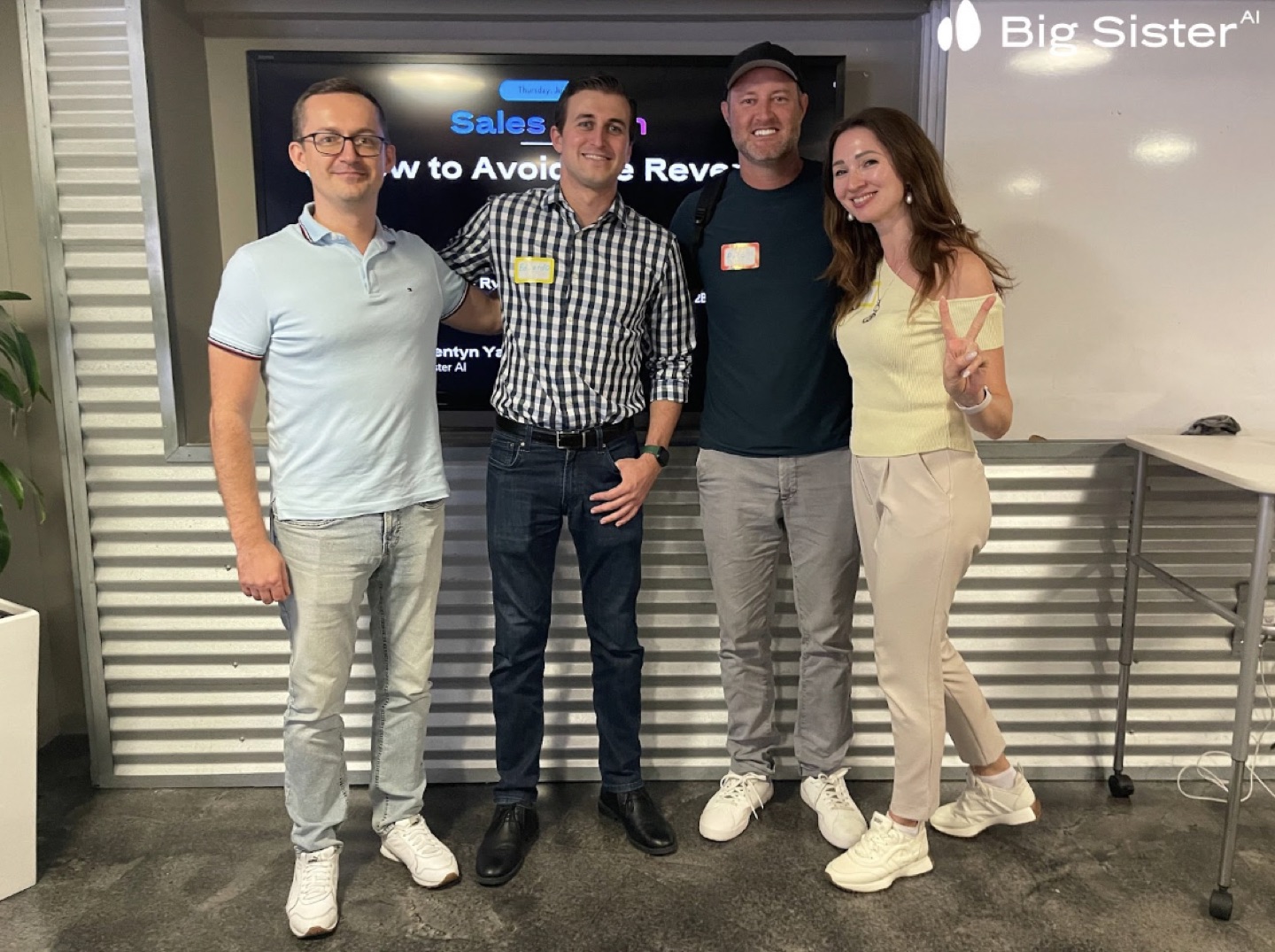
Most revenue problems aren’t caused by a bad market. They’re caused by sales mistakes that quietly kill revenue long before anyone notices - hiring reps too early, scaling before product-market fit, chasing the next fundraise instead of the next customer. At a recent “Sales OStin” event, two founders who lived through exactly these mistakes broke down what went wrong, and what they changed to fix it.
The speakers were Pete Ryan, Co-CEO at Hifive (hf.app) - a platform for sales introductions, and Eduardo Muller, Strategic GTM & Sales Leader specializing in SaaS and AI. The world of sales is ever-evolving, and moments of honest, experience-driven learning are rare.
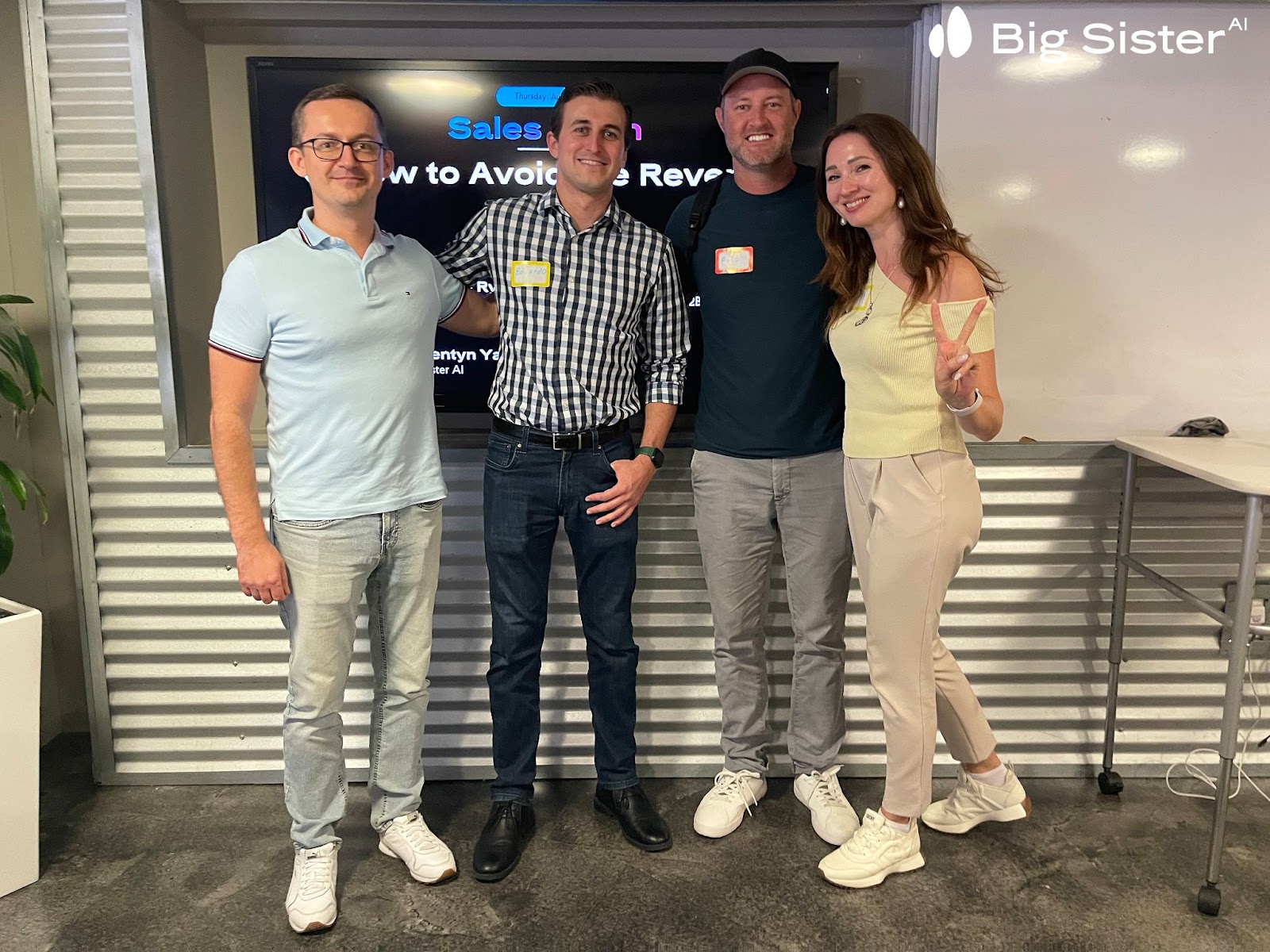
That’s why this event, organized by Lucy Yaromenko and Valentyn Yaromenko, owners of Big Sister AI - a cutting-edge sales performance platform - provided such a valuable space for sales leaders to share frank conversations and practical insights.
We thank Pete and Eduardo for their candid sharing today, openly discussing their business mistakes and lessons with refreshing honesty, which makes this knowledge even more impactful for entrepreneurs, CEOs, and heads of sales departments.
Here are the seven sales mistakes that kill revenue - told firsthand by the people who made them, plus what to do instead.
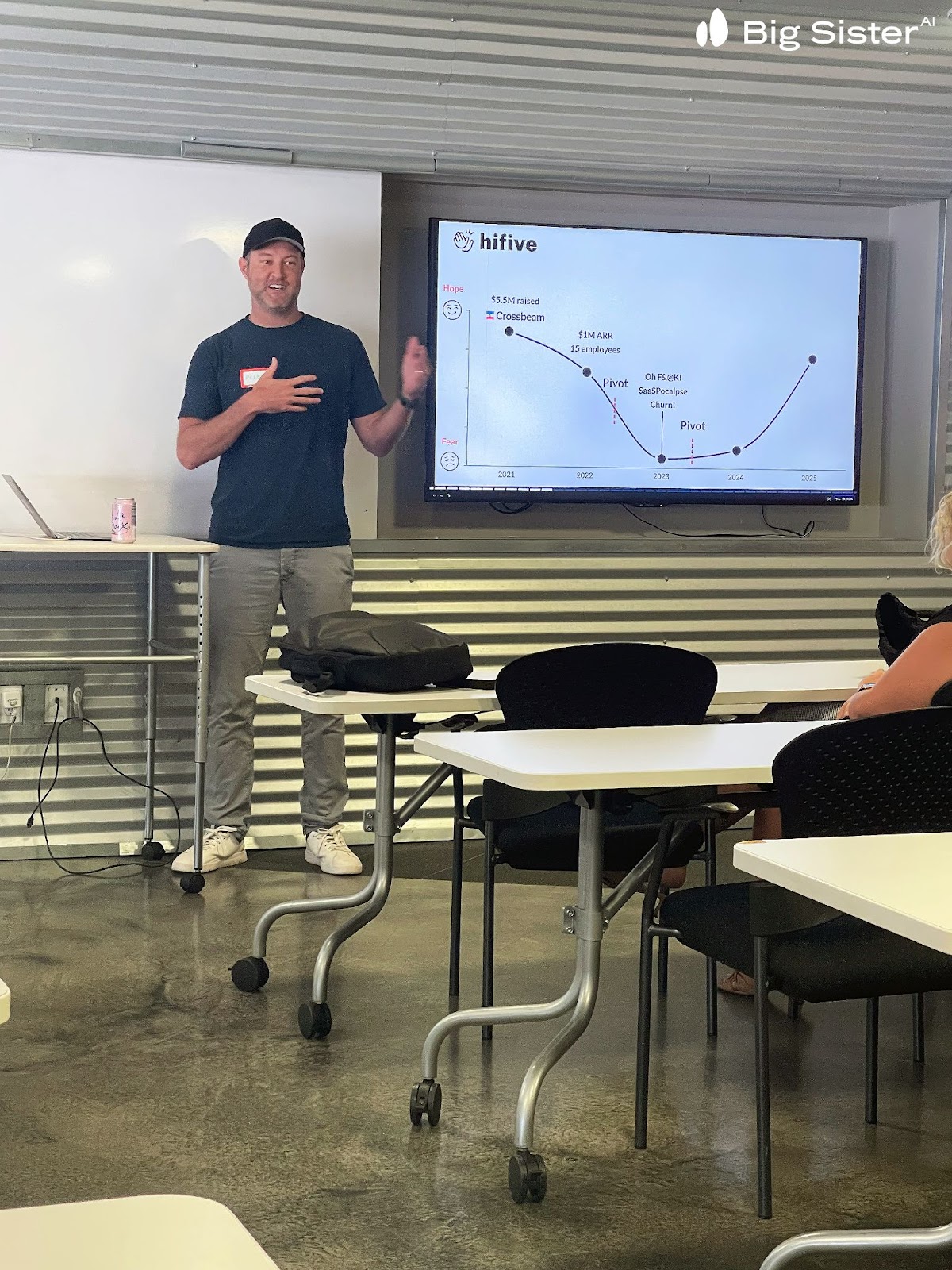
Pete Ryan, Co-CEO at Hifive: Turning Failures Into a Sales System
Pete Ryan’s experience navigating startup sales mistakes lends valuable lessons for building a sustainable revenue engine.
Mistake #1: Selling Before Product-Market Fit
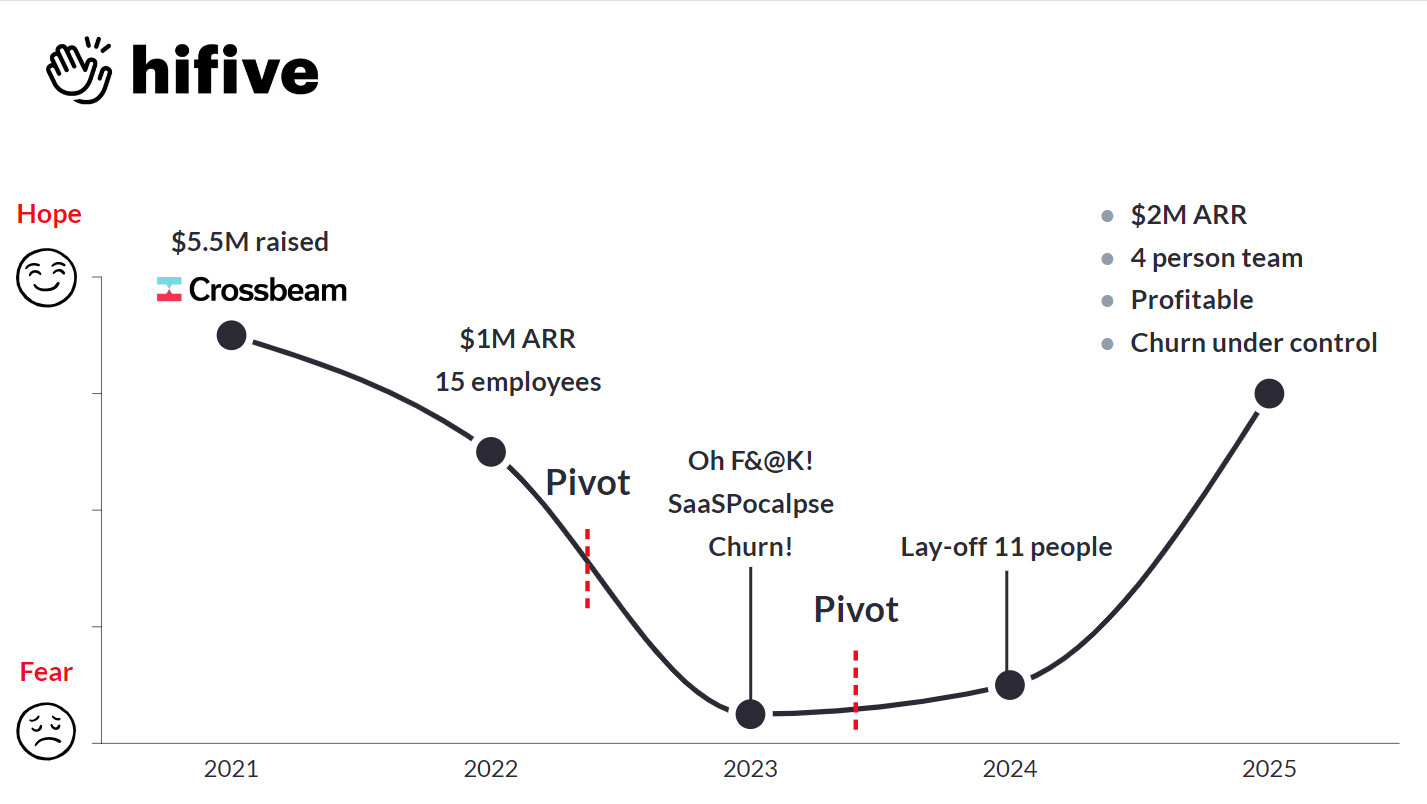
One standout visual from Pete’s presentation is the Slide: My Hifive Story, which charts the company’s rollercoaster journey - from raising $5.5M and reaching $1M ARR with 15 employees in 2022, to facing a severe “SaaSPocalypse” with churn spikes and layoffs in 2023, before recovering in 2024 with a lean four-person team achieving $2M ARR profitably. This story highlights the volatility startups face and the importance of adaptability.
“So yeah, don't sell ahead of product market fit.”
Pete’s straightforward warning encapsulates the core lesson: premature sales scaling is a costly trap that wastes resources and hurts morale. The fix isn’t complicated, just uncomfortable - hold off on hiring a sales team until a handful of customers are renewing and referring without much hand-holding. Revenue that requires constant founder intervention isn’t product-market fit yet; it’s a signal to keep iterating.
Mistake #2: Oversized Teams Dilute Accountability
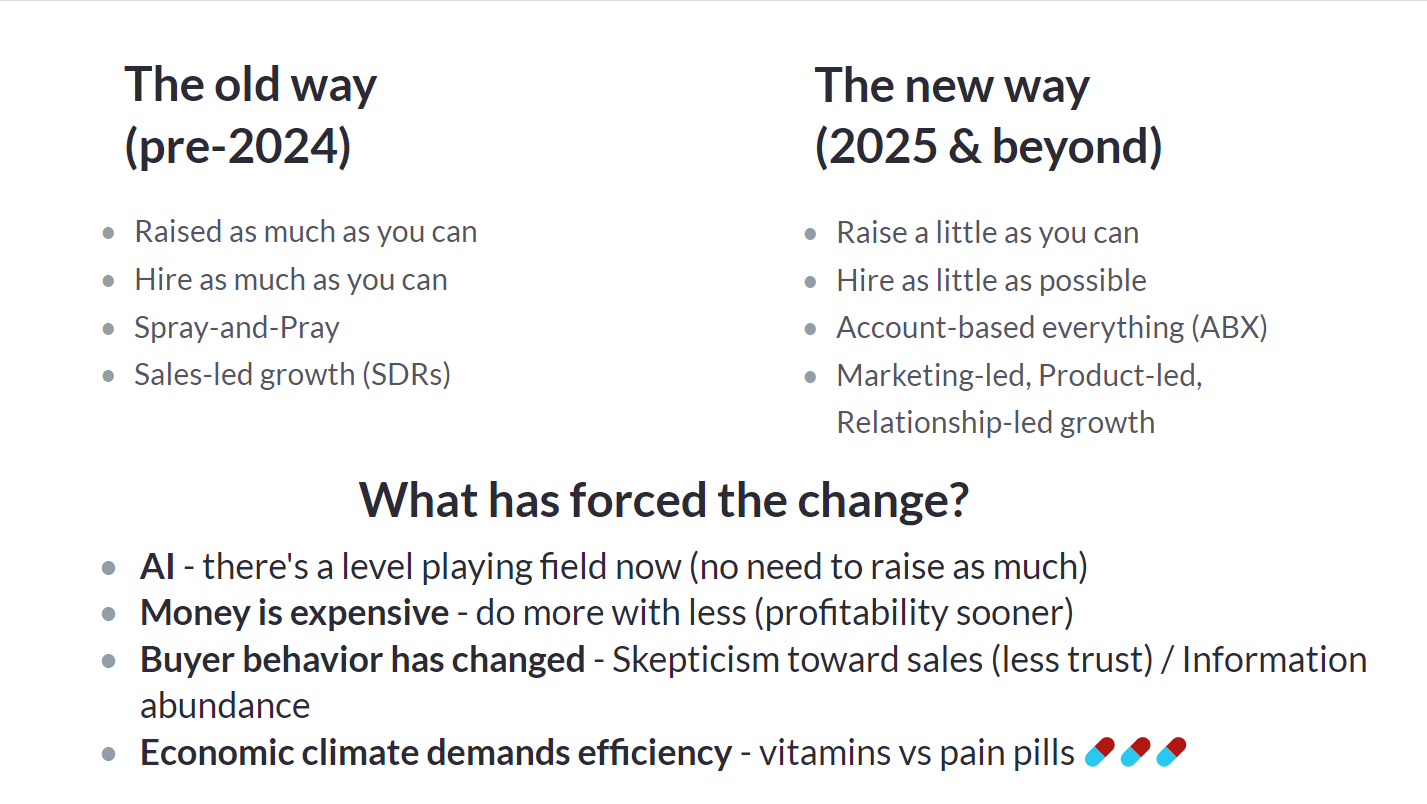
To complement these themes, the slide "The Old Way vs. The New Way" contrasts sales strategies before and after 2024. The traditional “spray-and-pray” and aggressive hiring mindset is being replaced by a leaner, smarter approach driven by AI, changing buyer behaviors, and the demand for efficiency.
“The more people you have on your team, the less accountability there is for each person on the team.”
This insight reminds sales leaders that larger teams don’t automatically mean better results; in fact, they often dilute responsibility and hurt execution discipline. The practical takeaway is to keep teams small and metrics visible - fewer reps, clearer ownership per deal, and pipeline reviews that surface stalled opportunities before they quietly die. When quota misses trace back to process, not effort, that’s a coaching problem, not a headcount problem - see our breakdown of why AI sales tools fail sales teams.
Finally, Pete wraps his diagnosis with a candid remark:
“There's no kickback, though, from me.”
This reflects his no-excuses approach to fixing system-level process failures, rather than assigning blame.
Key takeaways from Pete:
- Commit to product-market fit before ramping sales.
- Embrace strict lead qualification frameworks to protect your team’s time.
- Monitor pipeline rigorously; stale deals kill forecasts.
- Drive accountability with clear metrics and coaching.
- Even with automation, human relationships remain critical.
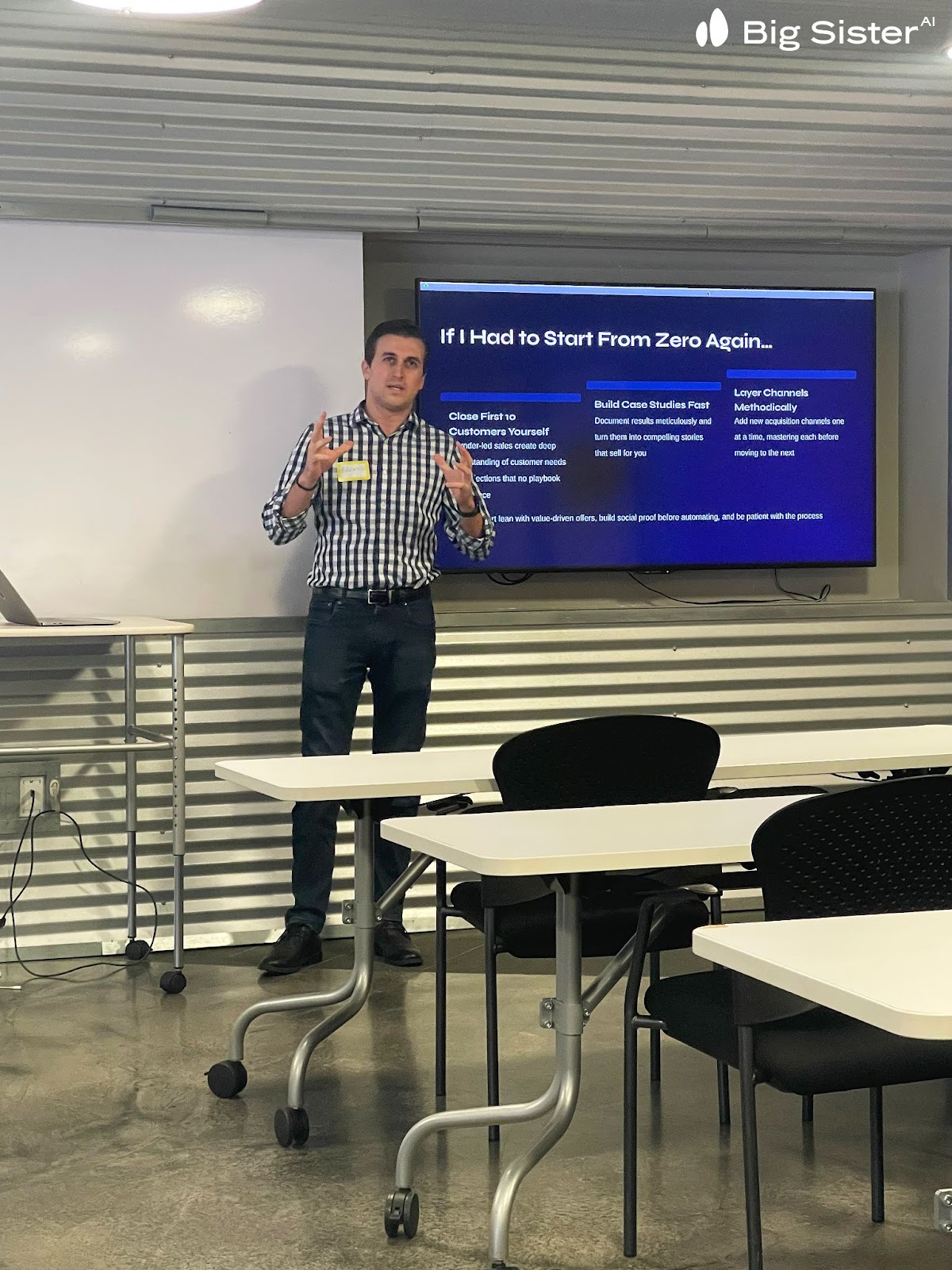
Eduardo Muller, Strategic GTM & Sales Leader: Relationships Over Transactions
Eduardo’s sales philosophy centers on building lasting relationships rather than chasing transactional wins, especially critical for startups balancing resource constraints.
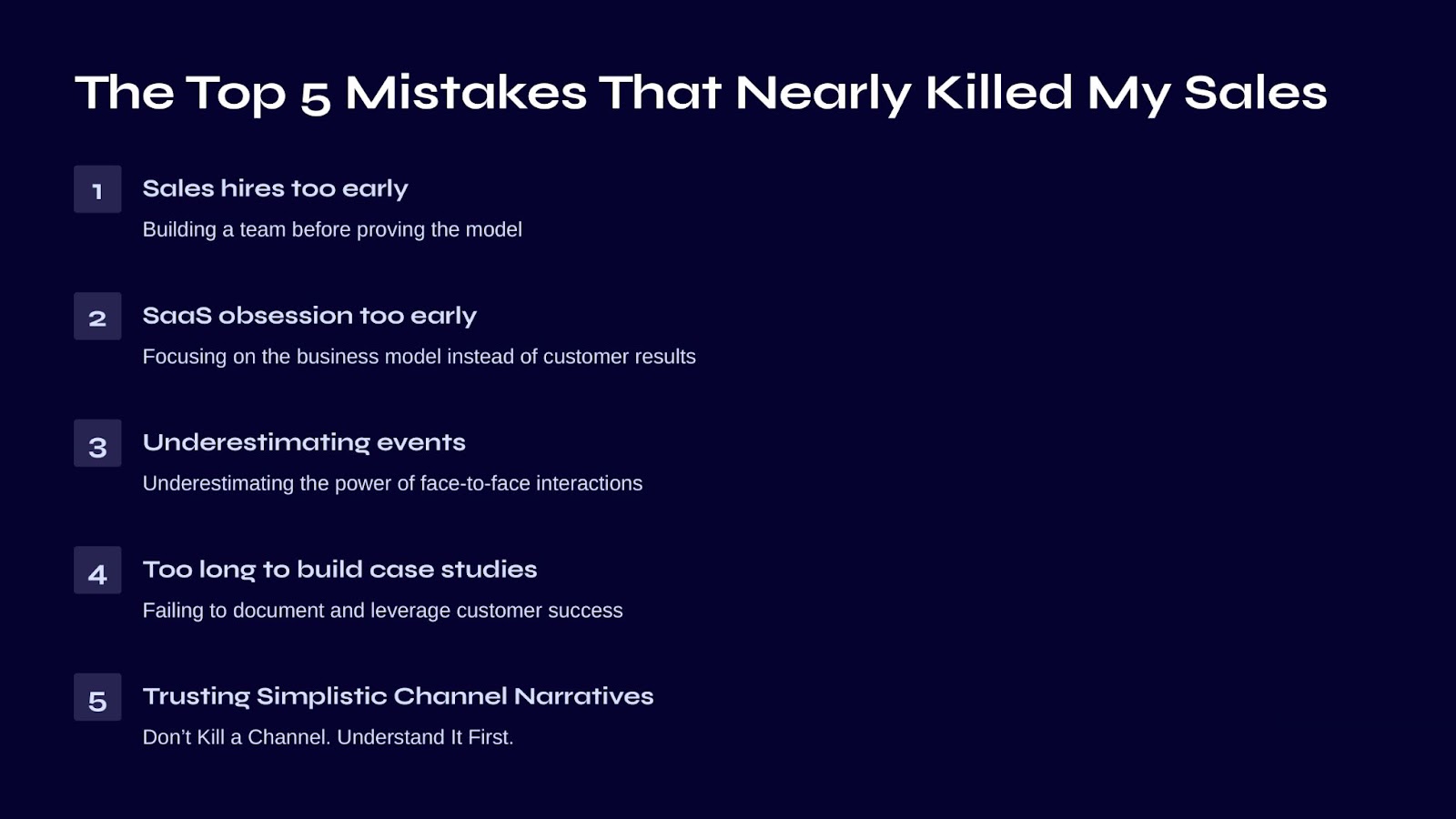
From the Slide: The Top 5 Mistakes That Nearly Killed My Sales, Eduardo shares his cautionary tale: premature sales hiring, obsession with fundraising, neglecting face-to-face interactions, delaying case study development, and misjudging sales channels.
Mistake #3: Hiring Sales Reps Too Early
“Hiring sales people too early and hiring too many sales people...was one of my mistakes.”
This underscores the risk of scaling headcount before achieving product-market fit and establishing repeatable revenue models. Founders are usually the best first sales reps a company will ever have - they carry a conviction a hire can’t fake. Bringing on reps before that motion is repeatable just adds payroll to a problem founder-led sales hasn’t solved yet.
Mistake #4: Obsessing Over Fundraising Instead of Customers
His reflection on fundraising reveals common pitfalls:
“I was kind of obsessed with fundraising. I thought I had to raise the next round.”
A distracting focus that can delay building sustainable sales and customer success foundations. Fundraising validates a story; customers validate a business. Founders who treat the next round as the goal often neglect the metrics that would make that round unnecessary in the first place.
Mistake #5: Neglecting Face-to-Face Relationships
Eduardo also points to a subtler mistake: over-indexing on automated outreach and dashboards while stepping back from real conversations with prospects and customers. Relationships still close deals, especially in the early stages when a founder’s credibility is the product. Skipping face time to “scale” faster trades short-term efficiency for long-term trust - and trust is what shortens sales cycles later.
Mistake #6: Delaying Case Studies and Social Proof
The longer a company waits to document its wins, the harder every subsequent sale becomes. Eduardo’s advice is to treat the first handful of customer successes as content, not just outcomes - write them up, get a quote, and use them immediately. Waiting for a “big enough” case study means selling without proof exactly when prospects are most skeptical.
Mistake #7: Misjudging - and Prematurely Killing - Sales Channels
Regarding sales channels, Eduardo advises prudence:
“Don't kill a channel, don't say outbound is dead before you try some of these.”
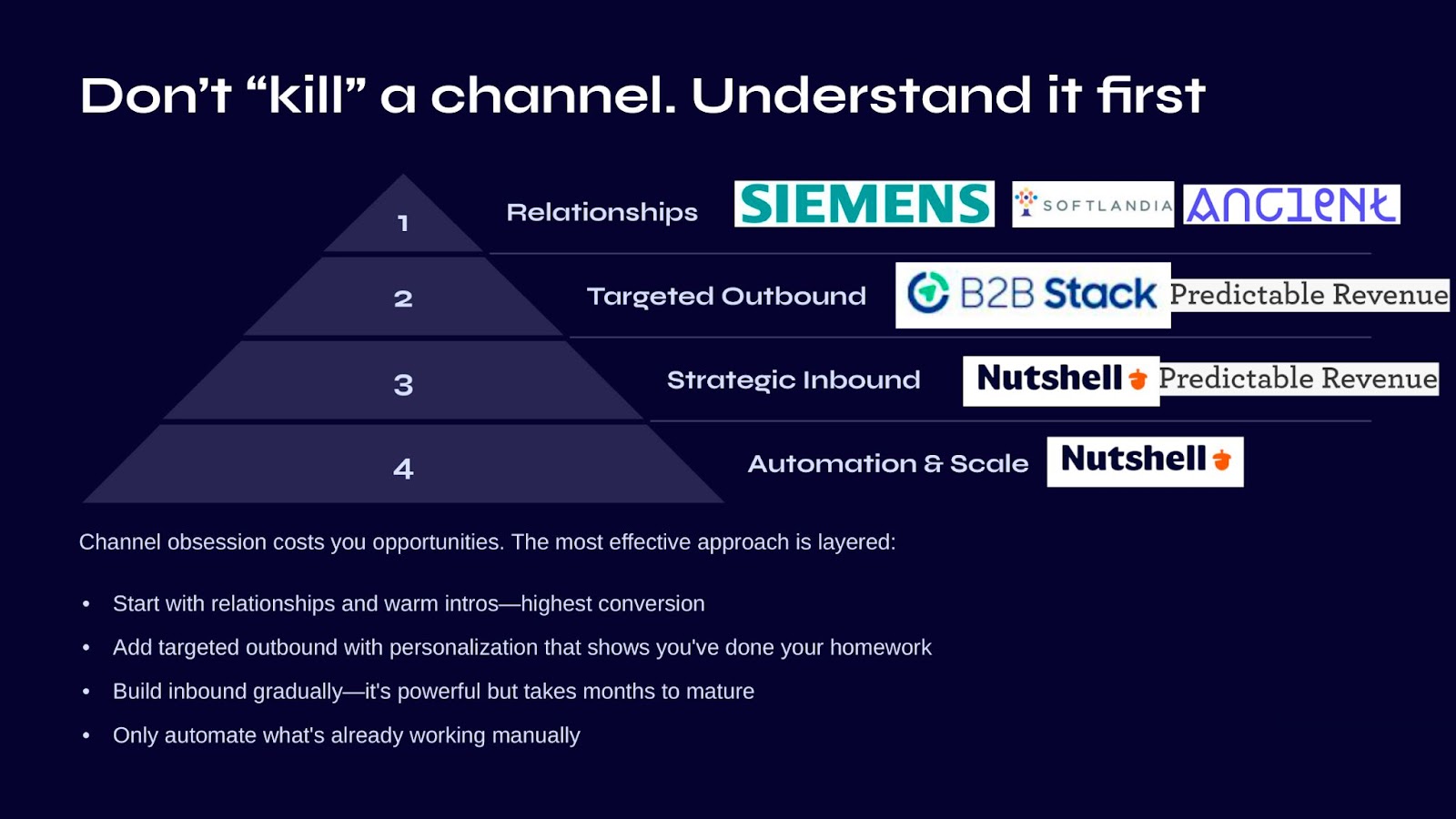
This aligns with the Slide: Don't 'kill' a channel. Understand it first - a layered approach to channels starting with warm introductions, targeted outbound, gradual inbound development, and cautious automation only after manual success is proven.
Core lessons from Eduardo’s playbook:
- Prioritize genuine relationships that start before and continue after the sale.
- Leverage your existing network for warm introductions and referrals.
- Build stories and social proof early to shorten sales cycles.
- Focus ruthlessly on activities that drive pipeline and revenue.
The 2025 Go-to-Market Shift: “Go-to-Network” vs. “Go-to-Market”
Both Pete and Eduardo agree that traditional GTM approaches are losing traction due to fractured buyer attention and eroding trust. The winning approach is to go-to-network:
- Raise less, hire less, spend less.
- Emphasize marketing-led, product-led, and relationship-led growth over brute-force scaling.
- Harness AI to level the playing field, while personalizing key touchpoints to combat buyer skepticism.
Actionable Insights for Sales Leaders
Leaders running startups or sales teams can take immediate action:
- Audit your sales process for leaks in qualification, pipeline health, and deal progression.
- Foster a coaching culture that nurtures continuous learning, not just quota chasing.
- Activate your network - your strongest lever for growth.
- Document and publicize customer wins promptly to build credibility.
- Cut distractions; focus consistently on what moves the pipeline and revenue forward.
Complacency and broken processes - not competition - are the biggest threats. Applying these lessons from Pete Ryan and Eduardo Muller will help you build a resilient, thriving revenue engine in 2025 and beyond.
Thank You Note and Next Steps
We extend sincere thanks to Pete Ryan and Eduardo Muller for generously sharing their real-world experiences and insightful lessons at Sales OStin. Their transparency and expertise provide invaluable guidance to sales leaders navigating today’s market complexities.
To continue your journey of sharpening sales strategies and avoiding costly mistakes, you are invited to join upcoming sessions in the Sales OStin series:
- Next Event: Join here
- Full Event Calendar: See all upcoming Sales OStin events
Stay connected with the Sales OStin community for ongoing actionable knowledge, peer support, and cutting-edge sales insights.